

A healthy gay relationship is built through the way two people treat each other: keeping agreements, listening, respecting a no and making room for both lives. You do not need a perfect history, complete self-confidence or a particular relationship model to deserve that kind of care.
Gay men can face questions about family acceptance, visibility, community expectations or earlier messages about sexuality. Experiences vary, and those pressures do not define every partnership or make a loving relationship inherently more difficult. Start with what is happening for you and your partner.
Five foundations to talk about
1. Trust
Can we rely on the agreements we actually made? Trust can grow through follow-through and honest repair. It does not require sharing passwords, accepting surveillance or having no private life.
2. Respect
Can each person express a preference, decline contact and be heard without punishment? Care includes taking differences seriously rather than assuming one man should lead or decide for both.
3. Commitment
What relationship are we both choosing? Discuss the time, exclusivity or other agreements you want instead of treating commitment as a fixed model every gay couple must follow.
4. Communication
Can we describe a specific event, explain what matters and ask for the other person’s account? A familiar partner still cannot read your mind, and openness need not mean immediate disclosure of everything.
5. Workable compromise
Is there an option both people freely accept? You can negotiate an ordinary plan; consent, identity and safety are not things you must surrender to meet in the middle.
Love is respect’s boundary guidance emphasizes room to express needs and limits without fear. A partner’s gender, a spiritual label or a long shared history does not change that expectation.
Eleven everyday ways to support the bond
- Name your own values. Ask what you want from a relationship without requiring yourself to become perfectly self-loving first.
- Make room to question shame. If negative messages about being gay trouble you, seek affirming support rather than treating your identity as the problem.
- Discuss one issue at a time. Describe what happened and ask a clear question, while leaving room to pause.
- Choose time together. A walk, a meal or a quiet evening can matter as much as an elaborate date; agree on what actually fits.
- Follow through or update the plan. Be honest about what is realistic instead of making promises you cannot keep.
- Separate forgiveness from repair. An apology does not require immediate trust or continued contact. Look for responsibility and changed behavior.
- Celebrate what matters to your partner. Ask how they would like support for a goal or success, without making yourself their only source of encouragement.
- Let intimacy be chosen. Affection, physical touch and personal conversation should be welcome to both people, not duties imposed by the relationship.
- Keep space for differences. Different hobbies or preferences need not threaten the bond. Important incompatibilities still deserve an honest conversation.
- Build support beyond the couple. Friends, chosen family and welcoming communities can offer belonging without either person losing their individual life.
- Talk about sexual health. Make it an ordinary shared-care conversation rather than a test of purity, loyalty or worth.
Keep sexual-health questions practical
Talk about relevant testing, protection and agreements before relying on assumptions. The CDC’s STI information for gay and bisexual men explains that many infections have no obvious symptoms. Ask a qualified clinician which tests, prevention options, vaccines and timing fit your sexual practices and circumstances.
A negative result or a relationship label does not answer every question about exposure or future risk. You can ask for care without accusing a partner, and each person retains control over their body and medical decisions.
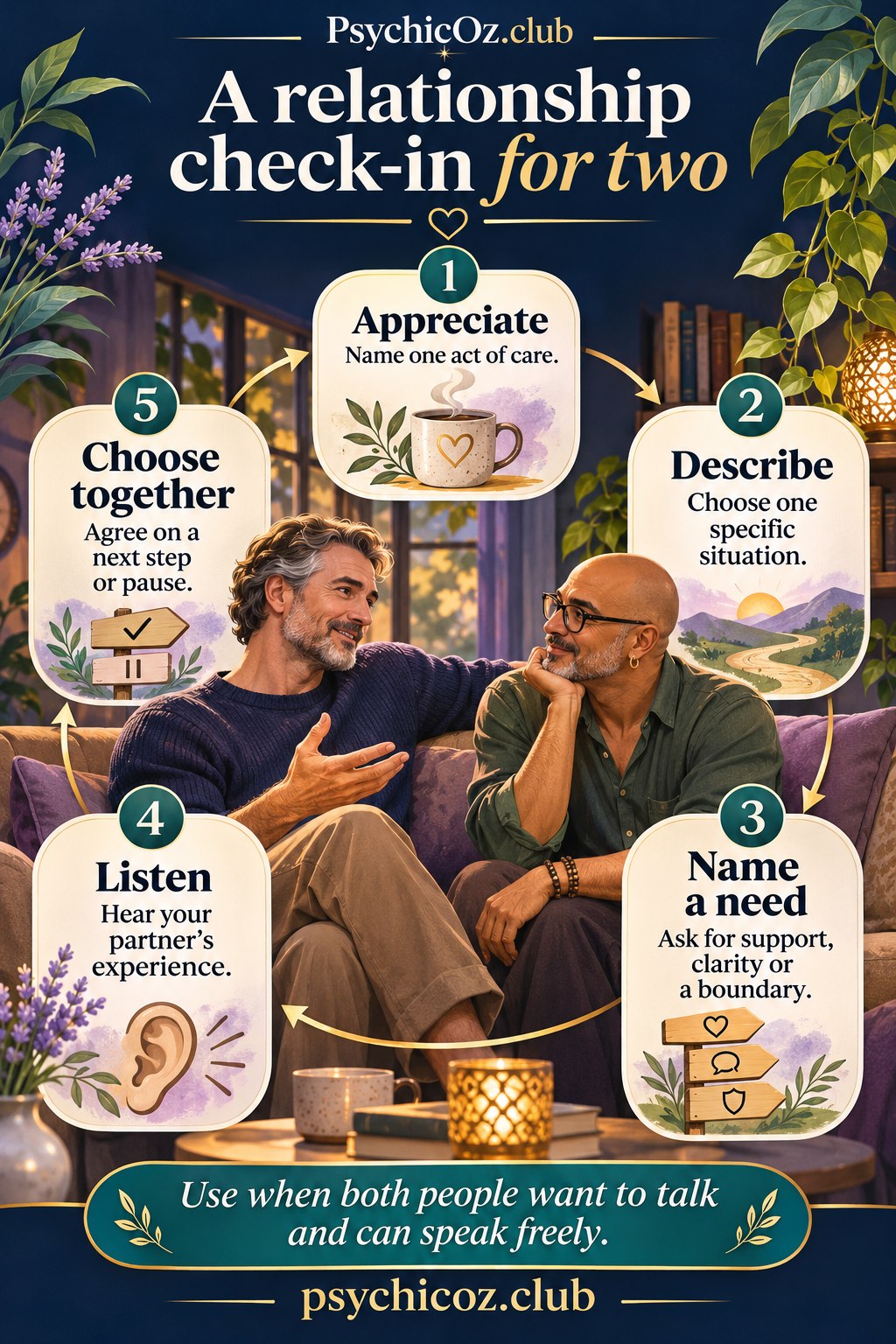
Free two-person relationship check-in
Use this only when both people want the conversation and it is safe to speak openly. Each takes a turn with the same prompts:
- One appreciation: What recent act of care mattered to me?
- One situation: What specific event would I like to discuss?
- One need: What support, clarity or boundary would help?
- One question: What is my partner’s experience of the situation?
- One choice: Is there a next step we both accept, or do we need a pause?
Example: “I appreciated your message yesterday. We have changed our weekend plans several times, and I would like something we can rely on. What is manageable for you?” You can accept a clear difference rather than negotiating until someone gives in.
Support can help without defining the relationship for you
An appropriately qualified, LGBTQ+-affirming counselor may help you explore a recurring concern, either individually or together when suitable. Ask about experience with gay clients, relevant qualifications, confidentiality, fees and how they handle your relationship agreements. Affirming care does not assume that being gay needs to change.
Joint counseling is not the default response to fear or control. The National Domestic Violence Hotline explains concerns about couples therapy in abusive relationships, including the risk of disclosures being used against a partner. Seek confidential specialist support if there are threats, coercion, monitoring or outing pressure. Use a safer device if needed and local emergency services for immediate danger.
You do not have to use therapy, spirituality or self-improvement to earn permission to leave an unwanted relationship. If you use twin-flame language, our same-sex twin-flame guide keeps spiritual meaning alongside mutual choice.

Build the relationship you both want
Shared joy, privacy, separate friendships and honest differences can all belong in a partnership. No article can promise that a relationship will last. These questions can help you understand whether the care and future being offered are ones you freely want to share.
Frequently asked questions
1. What makes a gay relationship healthy?
Consider mutual respect, chosen agreements, room for both voices and freedom to decline or disagree without fear.
2. Do gay couples need a different relationship model?
No single model fits every couple. Discuss the kind of partnership and relevant agreements you both want.
3. Do I need to love myself fully before dating?
No. Self-understanding can help, but perfection or complete confidence is not a requirement for deserving care.
4. Does trust require sharing passwords?
No. Trust and privacy can coexist. Monitoring is not something you owe to prove commitment.
5. How can we talk about a recurring disagreement?
Choose one specific event, explain a need and ask for the other person’s account when it is safe and welcome to talk.
6. Do we have to compromise on everything?
No. Consent, identity and safety are not obligations to bargain away. Some important differences may not have a workable compromise.
7. Does an apology mean I must forgive?
No. Forgiveness, trust, repair and continued contact are separate choices.
8. What if we want different amounts of time together?
Ask what feels realistic and welcome to each person. A clear difference is information, not a failure to love enough.
9. Is physical intimacy a duty in a long-term relationship?
No. Touch and sexual activity require freely given consent each time, and either person can decline.
10. How should we discuss sexual health?
Talk about relevant testing, prevention and agreements without shaming. Ask a clinician which tests and timing fit your circumstances.
11. Does looking healthy rule out an STI?
No. Many STIs have no obvious symptoms. Use appropriate testing and qualified guidance rather than appearance.
12. Should every gay couple seek therapy?
No. It is an optional source of support when useful. Ask about qualifications, affirming practice, fees and confidentiality.
13. Is couples counseling suitable if I fear my partner?
Joint counseling can create risks in abusive relationships. Seek confidential specialist guidance suited to your circumstances instead of assuming a shared session is safe.
14. Can spiritual meaning strengthen a relationship?
It may be meaningful when freely shared, but it does not establish compatibility or override boundaries.
15. What if the relationship is important but no longer right for me?
You can value what it meant while deciding what contact or commitment you want now. A meaningful history does not create an obligation to stay.